
Why Choosing the Best Lubricant for Garage Door Tracks and Rollers Matters More Than You Think
Finding the best lubricant for garage door tracks and rollers doesn’t have to be complicated — here’s a quick answer before we dive deeper:
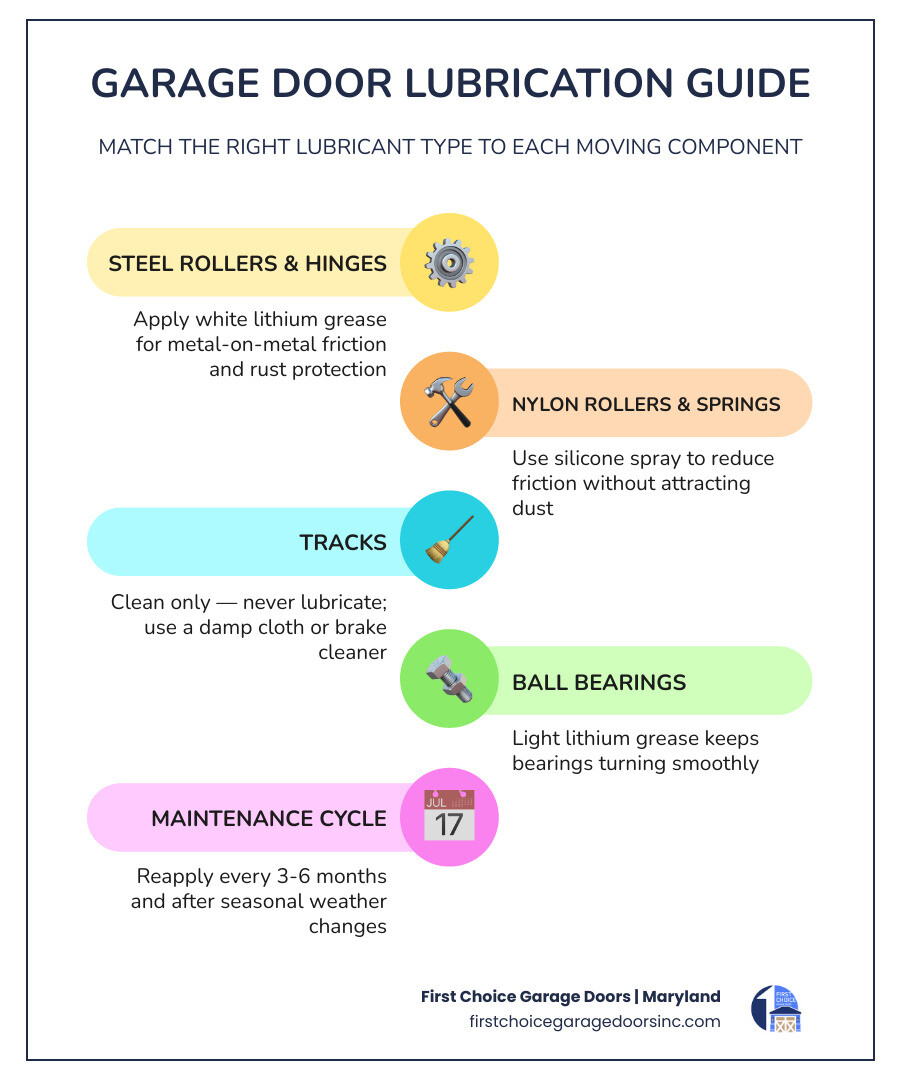
Quick Answer: Best Lubricants for Garage Door Tracks and Rollers
| Use Case | Best Lubricant Type | Top Products |
|---|---|---|
| Steel rollers & hinges | White lithium grease | WD-40 Specialist White Lithium Grease, 3-IN-ONE Garage Door Lube |
| Nylon rollers & springs | Silicone-based spray | Blaster Premium Silicone Spray, CRC Heavy Duty Silicone Lubricant |
| Tracks | Do not lubricate — clean only | Damp cloth or brake cleaner |
| General all-purpose | Silicone or lithium spray | 3-IN-ONE Garage Door Lube, DuPont Silicone with Teflon |
Key rules to remember:
- Use silicone spray or white lithium grease — not WD-40 or household oil
- Lubricate rollers, springs, hinges, and bearings every 3 to 6 months
- Clean tracks instead of lubricating them
- Always clean components before applying fresh lubricant
Your garage door is one of the hardest-working parts of your home. It opens and closes hundreds of times a year, grinding through heat, cold, rain, and humidity — especially here in Maryland. Over time, that constant movement creates friction, noise, and wear that quietly shortens the life of your rollers, springs, and hinges.
Most homeowners don’t think about garage door maintenance until the door starts squealing, sticking, or grinding. By that point, the damage is already building up. The good news? A simple lubrication routine every few months can prevent most of that wear, reduce noise, stop rust before it starts, and keep your door running smoothly for years longer.
The tricky part is knowing which lubricant to use, where to apply it, and — just as importantly — where not to apply it. The wrong product in the wrong place can actually make things worse.
This guide covers everything Maryland homeowners need to know to get it right.
Understanding the Best Lubricant for Garage Door Tracks and Rollers
When it’s May 2026 and you’re standing in your garage in Columbia or Frederick, looking at a noisy door, your first instinct might be to grab whatever spray is under the kitchen sink. However, the best lubricant for garage door tracks and rollers is a specialized choice. Using the right formula ensures that your door doesn’t just work today, but continues to work through the humid Maryland summers and freezing winters.
There are two primary champions in garage door maintenance: silicone-based sprays and white lithium grease.
- Silicone-Based Sprays: These are prized for their moisture resistance and ability to withstand extreme temperatures (often ranging from -20°F to 250°F or more). Silicone creates a slick, non-stick surface that repels water and prevents rust. Because it dries quickly and leaves a tack-free film, it doesn’t attract as much dust and grime as thicker greases.
- White Lithium Grease: This is a heavy-duty lubricant that excels at reducing metal-on-metal friction. It sprays on as a liquid to penetrate tight spaces but sets as a thick, protective coating. It is ideal for parts that bear high pressure, like steel hinges and the screws of a screw-drive opener.
Keep It Greasy with Regular Garage Door Lubrication is a mantra we live by because regular application prevents the metal-on-metal grinding that leads to expensive repairs.
Silicone vs. Lithium Grease: Performance Comparison
| Feature | Silicone Spray | White Lithium Grease |
|---|---|---|
| Best For | Nylon rollers, springs, weatherstripping | Steel rollers, hinges, metal chains |
| Dust Attraction | Very Low | Moderate |
| Moisture Resistance | Excellent | Good |
| Temperature Range | Very Wide | Moderate to High |
| Consistency | Light, thin film | Thick, stays in place |
Choosing the best lubricant for garage door tracks and rollers for nylon vs. steel parts
Material compatibility is the secret to a long-lasting door. If you have nylon rollers (the black or white plastic-looking wheels), you should avoid heavy greases that can degrade the material. Silicone is the winner here. For steel rollers with exposed ball bearings, a heavier lithium grease provides the cushioning needed for those metal-to-metal contact points.
For more detailed information on how these materials affect your door’s health, check out our garage door maintenance services.
Top recommended garage door lubricant products in 2025 and 2026
As we move through 2026, several products have stood the test of time and Maryland weather. We recommend looking for formulas that offer:
- Weather resistance: Essential for Easton and Columbia humidity.
- Quick-drying formulas: To prevent drips on your garage floor or car.
- Non-staining properties: To keep your door panels looking sharp.
- Tack-free film: This ensures that the lubricant repels dust and debris rather than trapping it.
Popular choices include the WD-40 Specialist White Lithium Grease, Blaster Premium Silicone, and the 3-IN-ONE Garage Door Lube. These products are often under $10 and provide enough formula for multiple maintenance sessions. You can find more about these in our garage door accessories section.
Essential Components to Lubricate for a Quiet Door
A garage door isn’t just a slab of wood or steel; it’s a complex machine. To silence the “chatter” and “rumble,” you need to target specific friction points.
- Torsion Springs: These are the large springs located above the door. They do the heavy lifting. Lubricating them reduces the friction between the coils as they expand and contract.
- Roller Bearings: If your rollers have bearings, apply the lubricant directly into the center of the wheel.
- Hinges: Focus on the pivot points where the door panels bend.
- Pulleys and Bearings: These are found in extension spring systems and should be kept slick to ensure the cables move freely.
- Drive Chains/Screws: If your opener uses a metal chain or screw, a light coating of lithium grease can prevent grinding.
If you’ve ever wondered Why Your Garage Door Is Noisy, it’s usually because one of these parts is bone-dry and crying out for help. For a comprehensive look at how we handle these moving parts, see our residential garage door services.
Why you should avoid using standard degreasers or household oils
This is the most common mistake we see in Maryland. Do not use standard WD-40 Multi-Use Product. While it’s great for loosening a rusted bolt, it is a solvent and degreaser, not a long-term lubricant. It will actually strip away existing grease and then evaporate, leaving your parts even more vulnerable.
Similarly, avoid household oils or thick axle grease. These are “dust magnets.” They will trap dirt, hair, and bugs, creating a thick, abrasive paste that acts like sandpaper on your rollers and tracks. This leads to mechanical resistance and more reasons a garage door could become noisy over time.
Step-by-Step Maintenance for Maryland Homeowners
Maintenance doesn’t have to be a full-day project. Following a structured approach will ensure your door stays in top shape without the mess.
- Safety First: Disconnect the automatic opener by pulling the red emergency release cord. Ensure the door is fully closed.
- Clean the Tracks: This is the most important step. Use a damp cloth or a vacuum to remove cobwebs, dirt, and old grease. If the tracks are particularly sticky, a bit of brake cleaner on a rag works wonders.
- Inspect Hardware: While cleaning, look for frayed cables or loose bolts. Tightening a loose screw now can prevent a mechanical failure later. Our Garage Door Maintenance Tips to Ensure a Long-Lasting Door provides a great checklist for this.
- Apply Lubricant: Use the precision straw to apply small, even amounts to the springs, hinges, and roller bearings.
- Operate the Door: Manually lift and lower the door a few times to distribute the lubricant evenly.
If you hit a snag or find a broken part during your inspection, our garage door repair services are always available to help.
How to apply the best lubricant for garage door tracks and rollers without making a mess
The goal is a thin, even coat — not a dripping mess.
- Use the Straw: Most garage door lubricants come with a precision straw. Use it! It allows you to get deep into the bearings without spraying your garage walls.
- Wipe the Excess: Keep a rag in your other hand. After spraying a hinge or roller, wipe away any drips immediately.
- The “No-Lube” Rule for Tracks: Repeat after us: I will not lubricate the tracks. Lubricating the tracks actually makes it harder for the rollers to roll; instead, they start to slide, which creates flat spots on the wheels. Clean tracks are happy tracks. This is a key part of Lubrication and Adjustments for a Happier Annapolis Garage.
Seasonal maintenance schedules for the Mid-Atlantic climate
In Maryland, our doors face a unique set of challenges.
- Winter: Cold temperatures can cause standard grease to thicken and harden, making the motor work harder. Use a low-temperature rated silicone spray. See our Garage Door Maintenance Tips for Winter for more.
- Spring: This is the time to wash away the salt and grime from the winter. Check our Garage Door Maintenance Tips to Follow This Spring.
- Summer: High humidity can lead to rust on springs and tracks. A moisture-displacing silicone spray is your best friend here. Read more in our Garage Door Maintenance Tips for Summer.
- Fall: Prepare for the upcoming freeze by ensuring all moving parts are well-coated. Follow our Garage Door Maintenance Tips to Keep Your Door in Top Shape This Fall.
Common Mistakes and Safety Precautions
Garage doors are heavy and under immense tension. Safety should always be your priority.
- Torsion Spring Danger: Never attempt to adjust or remove the torsion springs or the bottom brackets they are attached to. These are under enough pressure to cause serious injury. Lubricating them is safe; wrenching on them is not.
- Ladder Safety: Always use a sturdy, level ladder when reaching for the springs or the opener. Never stand on the top rung.
- Over-Lubrication: More is not better. Excessive lubricant will eventually drip onto your car’s paint or create a slip hazard on the garage floor.
- Sensor Check: After you finish, make sure you haven’t accidentally bumped the safety sensors at the bottom of the tracks. If the lights are blinking, the door won’t close.
For more safety-first advice, review our Six Preventive Residential Garage Door Maintenance Tips and our garage door installation services.
Frequently Asked Questions about Garage Door Maintenance
How often should I lubricate my garage door tracks and rollers?
For most homes in Columbia, Frederick, and Easton, we recommend lubricating every 3 to 6 months. However, you should do it sooner if you notice:
- The door makes a high-pitched squeak or a grinding sound.
- The door appears to “stutter” or shake as it opens.
- You see visible rust on the springs or hinges.
- The opener seems to be struggling more than usual.
Should I lubricate the garage door tracks directly?
No. You should clean the tracks, but do not apply lubricant to them. Lubricant in the tracks attracts dirt and causes the rollers to slip rather than turn. This creates friction and can eventually lead to the door jumping off the tracks. Keep the vertical and horizontal tracks dry and debris-free.
Can improper lubrication damage my garage door system?
Yes, absolutely. Using the wrong product (like heavy axle grease or WD-40) can lead to:
- Opener Strain: Thick, gummy grease makes the motor work harder, leading to premature failure.
- Roller Sticking: When rollers slide instead of roll, they wear down unevenly.
- Track Misalignment: Over time, the vibration from a poorly lubricated door can loosen the hardware that holds the tracks in place.
- Rust Formation: If you use a product that doesn’t repel moisture, the internal components of your springs can rust and snap.
Conclusion
Taking the time to find the best lubricant for garage door tracks and rollers and applying it correctly is one of the smartest things you can do for your home. It’s a small investment of time and a few dollars that pays off in a quieter home, a more reliable door, and the avoidance of major repair bills.
At First Choice Garage Doors, we’ve seen how a little bit of “TLC” goes a long way. Whether you are in Columbia, MD, or across the Eastern Shore in Easton, our team of expert technicians is ready to provide professional tune-ups and maintenance to ensure your door stays in peak condition. If your door is still making noise after a good cleaning and lubrication, it might be time for a professional adjustment.
Don’t wait for a breakdown to give your garage door the attention it deserves. For expert help, explore our professional garage door maintenance options today!